Showing posts with label Timothy Leary. Show all posts

5/15/12

eBay sale: Leary's Floatation Tank


A rare piece of psychedelic history, Timothy Leary's floatation tank is currently up for auction on eBay in a special charity listing. 100% of the sale price will support MAPS, the Multidisciplinary Association for Psychedelic Studies. MAPS is a leading organization in promoting psychedelic research and progressive drug policy. This unit was given to Leary by John C. Lilly, the scientist and consciousness explorer who first developed the isolation tank in the 1950s.

Auction bidding starts May 17th and ends May 27th.


(thanks to Ian Brown for the tip)

9/29/11

9/22/11


Timothy and Barbara Leary portrait by Helmut Newton, Beverly Hills, 1988

5/17/11

This Is Acid Age #2

1. The Situation
During the last 4000 years a basic spiritual issue has been debated by those on the one hand who believe in the absolute validity of current relifious and scientific models (realists) and those who see these conventional models as flimsy game artifacts (sometimes useful, more often stifling) imposed on the evolving processes of life. The latter (called mystics, visionaries, nominalists, existentialists) are more concerned with man’s evoling spiritual potentialities than with his material or intellectual achievements.

(from Statement of Purpose of the Internal Federation for Internal Freedom, 3rd draft; November 3, 1962. Signed Richard Alpert, Ph.D., Walter Clark, Ph.D., Timothy Leary, Ph.D., George Litwin, Ralph Metzner, Ph.D., Madison Presnell, M.D., Huston Smith, Ph.D., Gunther Weil.)


Read in Full:
Acid Age Journal, pages 36-37 (pub. September 2011):

4/10/11

You Have to Die to Be Reborn (Excursus)


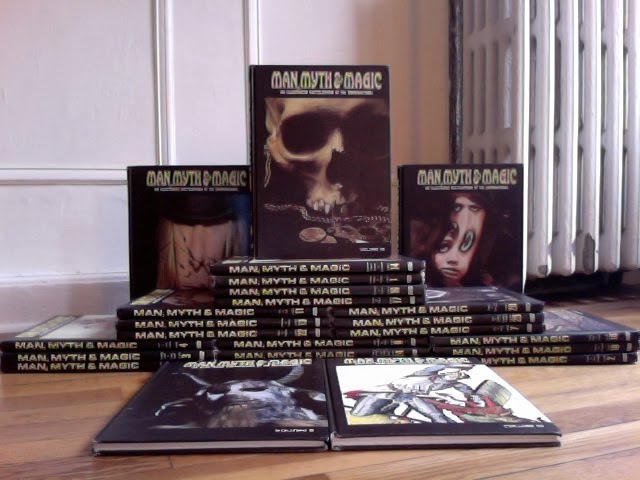
Written by Mircea Eliade, the entry for Shamanism in vol. 19 of Man, Myth and Magic bears this image and the following caption:


“A Lapp shaman with his drum and lying on the ground in trance: it is in ecstatic trance that the shaman makes his journeys to heaven and hell; he is the man who can die and return to life again, many times.” Each time the shaman makes this journey he is treading a path first broken during his psychic initiatory crisis. Eliade argues that the process of initiation occurs as a healing process to resolve a moment of madness in the individual resulting from the initial experience of being divinely called for his shamanic vocation.

The initiation is understood as a process of death and rebirth: “first, torture at the hands of demons or spirits, who play the role of masters of initiation; second, ritual death, experienced by the patient as a descent to hill or an ascent to heaven; third, resurrection to a new mode of being – the mode of ‘consecrated man,’ that is, a man who can personally communicate with gods, demons and spirits. For initiatory death is always followed by a resurrection; that is, in terms of psychopathological experience, the crisis is resolved and the sickness cured. The shaman’s integration of a new personality is in large part dependent on his being cured.”

The depiction on the right of the shaman in ecstatic trance should be familiar to anyone with a passing familiarity with contemporary drug culture: the prostrate shaman covered by his own drum resembles a passed-out druggie, his senses overwhelmed, the flickering flame of his ego temporarily snuffed. It is a reminder of one of the most recurrent tropes that emerged in psychedelic-spiritual culture of the late sixties and seventies: the process of death and rebirth. Since their incursion into twentieth-century America via the worlds of Harvard psychology, the Millbrook estate and the International Federation of Internal Freedom, the experiential effects of psychedelics have been understood in religious analog.

—————


A fundamental component of man’s religious consciousness, the death-rebirth process can be found across a great deal of literature dealing with psychedelic experience. Published in 1968 by the League of Spiritual Discovery, Inc, Timothy Leary’s High Priest, “the first of a four-volume biblical account of the birth, structural growth, exile, return, persecution, redemption, and flowering of the LSD religious cult,” thoroughly intertwines drug and religious rhetoric until they are inseparable – part of an effort, as one of the side-column notes phrases it, to develop a vocabulary to describe “all the modalities of a divine inebriant.” High Priest does not discuss the death-rebirth process in a psychedelic context so much as literarily enact it in liturgy and exegesis. Chapter pages bear layouts that collage I Ching quotes and oracular imagery and titles like Death of the Mind: Abysmal Prelude, and You Have to Go Out of Your Mind to Use Your Head.


Timothy Leary - High Priest - Chapter 4


—————


Marcia Moore opens Journeys into the Bright World, her 1978 account of ketamine experimentation, with the title You Have to Die to Be Reborn. Here the image of self-transfiguration becomes an imperative, and the stakes of this process, the death of the self, become absolute.

The details of her experience are colored in the hyperbolic tones of eroticized mysticism characteristic of Calfornian New Age philosophy. Moore describes the come-down process, by which the soul finds itself reborn into the material world by saying "at that point it didn’t seem remotely possible that I could ever return to the phenomenal world of things and doings in which I had formerly functioned…As I began to look out of my eyes once more I became aware that Jane was sitting silently beside me. It seemed terribly important that she should be there, and that we should be sharing this sacred interval together. I fancied that we were fellow priestesses in ancient Egypt, that she was my hierophant who would usher me back to the world of the living. Images of colonnaded temples, sphinxes, pyramids and winged figures floated behind her. I loved her enormously and felt that we had been through something like this before in one of the mystery schools of legendary eras. Surely we would remain soul sisters forever. “You are my initiator,” I whispered, certain that she would understand.”


Marcia Moore, 1968


—————

In his 1980 book LSD Psychotherapy, the culmination of more than twenty-years of clinical research in therapeutic practice with psychedelics, Stanislav Grof promoted the notion that the death-rebirth process experienced by the analysand during a clinical LSD session and rendered in the eye of the mind through cosmic imagery was in fact a conduit to perinatal experience – the originary traumatic memories of human birth encoded within the individual. Grof subdivided the perinatal trajectory into four stages or Basic Perinatal Matrices (BPM). According to Grof, the image below reflects the experience of volcanic ecstasy during BPM III, which “is frequently associated with visions of purifying fire (pyrocatharsis). During this stage, while releasing enormous amounts of destructive energy, LSD subjects identify with erupting volcanoes, atomic explosions, thermonuclear reactions, and even cosmic catastrophes.”


—————

The sole tattoo on my body is a Rosicrucian hourglass and scythe inked on the back of my left upper forearm. The image was chosen seven years ago at a time when I was reading Walter Benjamin’s Origin of German Tragic Drama, in a kind of metonymic homage to Benjamin and the theories of Baroque allegory and eschatology he explores in the text. The origin of Rosicrucianism in Germany roughly coincides with the time period of the Counter-Reformation addressed by Benjamin – late 16th and early 17th century. A traditional image for the fleetingness of time, which has always implied human mortality, the hourglass adopted new significance in eyes of the Rosicrucians, who saw in the hourglass’ ability to be turned over once more a sign of resurrection.


—————

Recorded last summer in Berlin, Night Plane – You Have to Die to Be Reborn is a mix in homage to Moore’s book and to the death-rebirth allegory. The lyrics of the opening title track are: you have to die / if you want to be reborn / you have to turn into the fire / if you want to be transformed.


Night Plane on Soundcloud

3/31/11


George Condo, Internal Space 2005

"Our research has almost limitless possibilities for the expansion of the human mind," say Leary and Alpert, and they plan to pursue that expansion through their federation as long as their supplies of psilocybin hold out."
Time, March 29, 1963 "Psychic Research: LSD"
"By last fall, it became clear that some psychiatrists and some investigators who were supposed to be experimenting only with animals were slipping LSD to unqualified buddies, who were using the drug for kicks. In Los Angeles, beatniks and assorted addicts lapped the stuff up, buying (for $1 apiece) lumps of sugar in which a drop of the potent raw material had been absorbed. Leary and Alpert, in their Harvard days, got a supply of psilocybin from Sandoz. Then, under last October's amendments to the Food and Drug Act, came stricter control. Sandoz, in an earnest effort to keep the drugs out of unlawful channels, promptly cut down its clientele to animal experimenters and scientists who are getting federal or state grants for research with human subjects." Time, March 29, 1963 "Psychic Research: LSD"

3/8/11

turning on


MCLUHAN:
The upsurge in drug taking is intimately related to the impact of the electric media. Look at the metaphor for getting high: turning on. One turns on his consciousness through drugs just as he opens up all his senses to a total depth involvement by turning on the TV dial. Drug taking is stimulated by today's pervasive environment of instant information, with its feedback mechanism of the inner trip. The inner trip is not the sole prerogative of the LSD traveler; it's the universal experience of TV watchers. LSD is a way of miming the invisible electronic world; it releases a person from acquired verbal and visual habits and reactions, and gives the potential of instant and total involvement, both all-at-onceness and all-at-oneness, which are the basic needs of people translated by electric extensions of their central nervous systems out of the old rational, sequential value system. The attraction to hallucinogenic drugs is a means of achieving empathy with our penetrating electric environment, an environment that in itself is a drugless inner trip.

Drug taking is also a means of expressing rejection of the obsolescent mechanical world and values. And drugs often stimulate a fresh interest in artistic expression, which is primarily of the audile-tactile world. The hallucinogenic drugs, as chemical simulations of our electric environment, thus revive senses long atrophied by the overwhelmingly visual orientation of the mechanical culture. LSD and related hallucinogenic drugs, furthermore, breed a highly tribal and communally oriented subculture, so it's understandable why the retribalized young take to drugs like a duck to water.

PLAYBOY: A Columbia coed was recently quoted in Newsweek as equating you and LSD. "LSD doesn't mean anything until you consume it," she said. "Likewise McLuhan." Do you see any similarities?

MCLUHAN: I'm flattered to hear my work described as hallucinogenic, but I suspect that some of my academic critics find me a bad trip.

PLAYBOY: Have you ever taken LSD yourself?

MCLUHAN: No, I never have. I'm an observer in these matters, not a participant. I had an operation last year to remove a tumor that was expanding my brain in a less pleasant manner, and during my prolonged convalescence I'm not allowed any stimulant stronger than coffee. Alas! A few months ago, however, I was almost "busted" on a drug charge. On a plane returning from Vancouver, where a university had awarded me an honorary degree, I ran into a colleague who asked me where I'd been. "To Vancouver to pick up my LL. D.," I told him. I noticed a fellow passenger looking at me with a strange expression, and when I got off the plane at Toronto Airport, two customs guards pulled me into a little room and started going over my luggage. "Do you know Timothy Leary?" one asked. I replied I did and that seemed to wrap it up for him. "All right," he said. "Where's the stuff? We know you told somebody you'd gone to Vancouver to pick up some LL. D." After a laborious dialog, I persuaded him that an LL. D. has nothing to do with consciousness expansion--just the opposite, in fact--and I was released. Of course, in light of the present educational crisis, I'm not sure there isn't something to be said for making possession of an LL. D. a felony.

1/1/11