Showing posts with label Ketamine. Show all posts

1/30/12

screwed mind


"Q: CCC is now based in Brooklyn, but the project was born in Texas. Could you let us know the greatest and/or weirdest psychedelic experience you associate with Texas?

W: I used to take acid in the suburbs and wander around outside, listening to “The Diamond Sea” by Sonic Youth and exploring abandoned buildings.

H: Probably discovering “Power Moves the Table” by South Park Mexican screwed by DJ Screw (RIP) after being up for a few days on glass while tripping on ketamine. It was the first time I listened to Screw and it felt like the music had a consciousness of its own."

9/26/11

ketaforensics


"After spending the last four months filing FOIA requests and thumbing through hundreds of pages of police reports in an attempt to solve the little-known murder of a San Antonian mycologist in the early 80s, I have come to the conclusion that crime solving is hard...Neither in my sober investigations nor in my daydreams did I ever consider the most obvious solution: self-administering an anesthetic dose of ketamine and mentally traveling back in time to witness the murder. Then I stumbled upon a non-fiction book called Into The Void by an author named Zoe7, a self described “multidimensional synergy personality cluster” composed of six distinct identities. The book details Zoe7's attempts to solve the JonBenét Ramsey murder using no other forensic equipment than a hypodermic needle filled with ketamine and his mind. As one would expect, his experiments were wildly successful and he is the only person known to have witnessed exactly what happened in the Ramsey home that fateful night in December of 1996." [HM]

"I found myself in a dark bedroom. There were two single beds in that bedroom, but the second bed was empty. What struck me as odd however, was that I saw JonBonet’s mother lying in bed asleep, holding her son in her arms. Then, as I was heading towards the door to continue my search for JonBonet, I was suddenly startled by JonBonet herself! She was wearing a white gown and thick fury flipflops. She was also carrying something close to her chest with one of her arms. I could not make out what it was, but the surprising thing however, was the fact that she could see me!...I kneeled down and carefully took JonBonet by her little shoulders and said to her that I had been looking for her, and that I wanted to find out what happened. Unfortunately for me, but fortunately for her––in a way––she did not realize that she had been murdered––at least not at that particular space-time (or perhaps probability) window I had arrived in." [Zoe7]

"KETAFORENSICS - THE ART AND SCIENCE OF USING KETAMINE TO SOLVE THE JONBENÉT RAMSEY MURDER" [VICE]

7/8/11

drugs and contingency

There are at least two experiences of the relation between psychedelic drugs and the idea of contingency. Let's say that one is called the coercive experience, and the other is called the dispersive.

The coercive experience is paranoiac, conspiratorial. It is ontologically suspicious. It is coercive because it is interrogatory, and more often than not, is forcefully searching for a foregone conclusion. The coercive is a great architect, building meaning upon meanings, in the way the Egyptians must have built the pyramids: with a great arsenal of violence. The coercive is religious, occult, reverent. It produces symbols by utilizing the capacity for psychedelics to temporarily erase your world. Anything that wanders into your space after your world-erasure is capable of adopting an auratic glow, because of the isolated nature of your encounter with it, and as part of the coercive's erasure of contingency, the sign before you becomes destiny.

At its most defective, the coercive is based on an irrational belief that self-authorizes the creation of a cosmos and then covers its tracks. The defective mode of the coercive is religious mania, the healthy mode, artistic creation.

The coercive works by attempting to gather the Many into the One. The dispersive works in the opposite direction, splitting unities into multiplicities. The dispersive views phenomena in the world not with suspicion, but with skepticism. The dispersive suspects that ontological inconsistencies can arise: I arrive at the office and it does not surprise me if my office were suddenly on the opposite end of the hall. This is the same lack of surprise, says Picasso, he would feel if, in the bath, his body suddenly dissolved into atoms.

The dispersive recognizes and investigates contingency by feeling the absurdity behind every particular and the potential for it to have been otherwise, to have played out a different way, belong to an alternate constitution of reality. The defective mode of the dispersive finds itself splintered off into some dead-end corner of the multiverse, unable to trace its way back to the collective stream of human experience. Dispersive experience's healthy mode finds its outlet in speculation. Its speculative regard for potentiality, which considers unrealized possibilities as real as mere actuality, makes it closely akin to science fiction.

6/22/11


[1004kg Ketamine seizure]

4/10/11

You Have to Die to Be Reborn (Excursus)


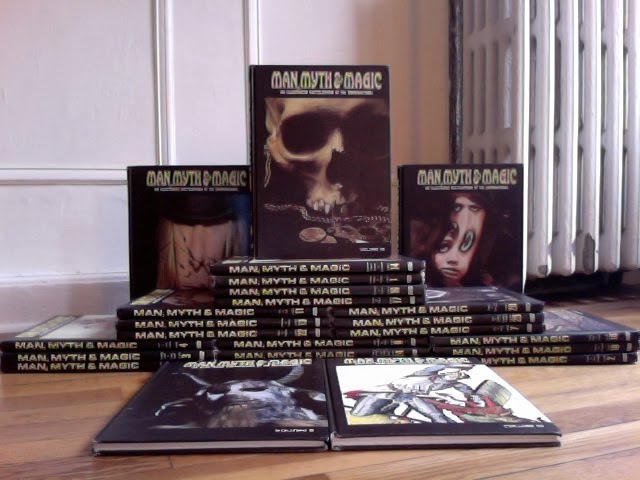
Written by Mircea Eliade, the entry for Shamanism in vol. 19 of Man, Myth and Magic bears this image and the following caption:


“A Lapp shaman with his drum and lying on the ground in trance: it is in ecstatic trance that the shaman makes his journeys to heaven and hell; he is the man who can die and return to life again, many times.” Each time the shaman makes this journey he is treading a path first broken during his psychic initiatory crisis. Eliade argues that the process of initiation occurs as a healing process to resolve a moment of madness in the individual resulting from the initial experience of being divinely called for his shamanic vocation.

The initiation is understood as a process of death and rebirth: “first, torture at the hands of demons or spirits, who play the role of masters of initiation; second, ritual death, experienced by the patient as a descent to hill or an ascent to heaven; third, resurrection to a new mode of being – the mode of ‘consecrated man,’ that is, a man who can personally communicate with gods, demons and spirits. For initiatory death is always followed by a resurrection; that is, in terms of psychopathological experience, the crisis is resolved and the sickness cured. The shaman’s integration of a new personality is in large part dependent on his being cured.”

The depiction on the right of the shaman in ecstatic trance should be familiar to anyone with a passing familiarity with contemporary drug culture: the prostrate shaman covered by his own drum resembles a passed-out druggie, his senses overwhelmed, the flickering flame of his ego temporarily snuffed. It is a reminder of one of the most recurrent tropes that emerged in psychedelic-spiritual culture of the late sixties and seventies: the process of death and rebirth. Since their incursion into twentieth-century America via the worlds of Harvard psychology, the Millbrook estate and the International Federation of Internal Freedom, the experiential effects of psychedelics have been understood in religious analog.

—————


A fundamental component of man’s religious consciousness, the death-rebirth process can be found across a great deal of literature dealing with psychedelic experience. Published in 1968 by the League of Spiritual Discovery, Inc, Timothy Leary’s High Priest, “the first of a four-volume biblical account of the birth, structural growth, exile, return, persecution, redemption, and flowering of the LSD religious cult,” thoroughly intertwines drug and religious rhetoric until they are inseparable – part of an effort, as one of the side-column notes phrases it, to develop a vocabulary to describe “all the modalities of a divine inebriant.” High Priest does not discuss the death-rebirth process in a psychedelic context so much as literarily enact it in liturgy and exegesis. Chapter pages bear layouts that collage I Ching quotes and oracular imagery and titles like Death of the Mind: Abysmal Prelude, and You Have to Go Out of Your Mind to Use Your Head.


Timothy Leary - High Priest - Chapter 4


—————


Marcia Moore opens Journeys into the Bright World, her 1978 account of ketamine experimentation, with the title You Have to Die to Be Reborn. Here the image of self-transfiguration becomes an imperative, and the stakes of this process, the death of the self, become absolute.

The details of her experience are colored in the hyperbolic tones of eroticized mysticism characteristic of Calfornian New Age philosophy. Moore describes the come-down process, by which the soul finds itself reborn into the material world by saying "at that point it didn’t seem remotely possible that I could ever return to the phenomenal world of things and doings in which I had formerly functioned…As I began to look out of my eyes once more I became aware that Jane was sitting silently beside me. It seemed terribly important that she should be there, and that we should be sharing this sacred interval together. I fancied that we were fellow priestesses in ancient Egypt, that she was my hierophant who would usher me back to the world of the living. Images of colonnaded temples, sphinxes, pyramids and winged figures floated behind her. I loved her enormously and felt that we had been through something like this before in one of the mystery schools of legendary eras. Surely we would remain soul sisters forever. “You are my initiator,” I whispered, certain that she would understand.”


Marcia Moore, 1968


—————

In his 1980 book LSD Psychotherapy, the culmination of more than twenty-years of clinical research in therapeutic practice with psychedelics, Stanislav Grof promoted the notion that the death-rebirth process experienced by the analysand during a clinical LSD session and rendered in the eye of the mind through cosmic imagery was in fact a conduit to perinatal experience – the originary traumatic memories of human birth encoded within the individual. Grof subdivided the perinatal trajectory into four stages or Basic Perinatal Matrices (BPM). According to Grof, the image below reflects the experience of volcanic ecstasy during BPM III, which “is frequently associated with visions of purifying fire (pyrocatharsis). During this stage, while releasing enormous amounts of destructive energy, LSD subjects identify with erupting volcanoes, atomic explosions, thermonuclear reactions, and even cosmic catastrophes.”


—————

The sole tattoo on my body is a Rosicrucian hourglass and scythe inked on the back of my left upper forearm. The image was chosen seven years ago at a time when I was reading Walter Benjamin’s Origin of German Tragic Drama, in a kind of metonymic homage to Benjamin and the theories of Baroque allegory and eschatology he explores in the text. The origin of Rosicrucianism in Germany roughly coincides with the time period of the Counter-Reformation addressed by Benjamin – late 16th and early 17th century. A traditional image for the fleetingness of time, which has always implied human mortality, the hourglass adopted new significance in eyes of the Rosicrucians, who saw in the hourglass’ ability to be turned over once more a sign of resurrection.


—————

Recorded last summer in Berlin, Night Plane – You Have to Die to Be Reborn is a mix in homage to Moore’s book and to the death-rebirth allegory. The lyrics of the opening title track are: you have to die / if you want to be reborn / you have to turn into the fire / if you want to be transformed.


Night Plane on Soundcloud

11/29/10

CHEMINOVA

10/3/10

7/8/10

dolphin group mind


I took ketamine by the tank at Marine World in Redwood City. I got in to the tank and I had a microphone near my head and an underwater speaker that went down into the dolphin tank. My microphone hit their loudspeaker under water. So I waited. Then I began to feel that I was in direct contact with them and as soon as I felt that one of them whistled, a long whistle, and it went from my feet right up to my head. I went straight out of my body. They took me to the dolphin group mind. Boy, that was scary! I shouted and carried on. I said, "I can't even handle one dolphin, much less a group mind of dolphins!" (John Lilly)

stars on the other side

DJB: Have you ever given ketamine to a dolphin?

JOHN: No. I gave them acid to see if it would knock out their respiration. It didn't. I couldn't understand what was happening to them on LSD except for one thing they did. They turned around along the tank at the same time, and suddenly they turned their beaks down and turned on their sonar straight downwards. I remember on my first acid trip that suddenly the floor disappeared and I saw the stars on the other side of the earth, so I stamped my foot on the floor to find it. That's what they were doing.

6/5/10

Ketamine


5/12/10